
Checkout Is the Midpoint, Not the Finish Line
Why the world still measures e-commerce wrong — and what happens when you look past the click

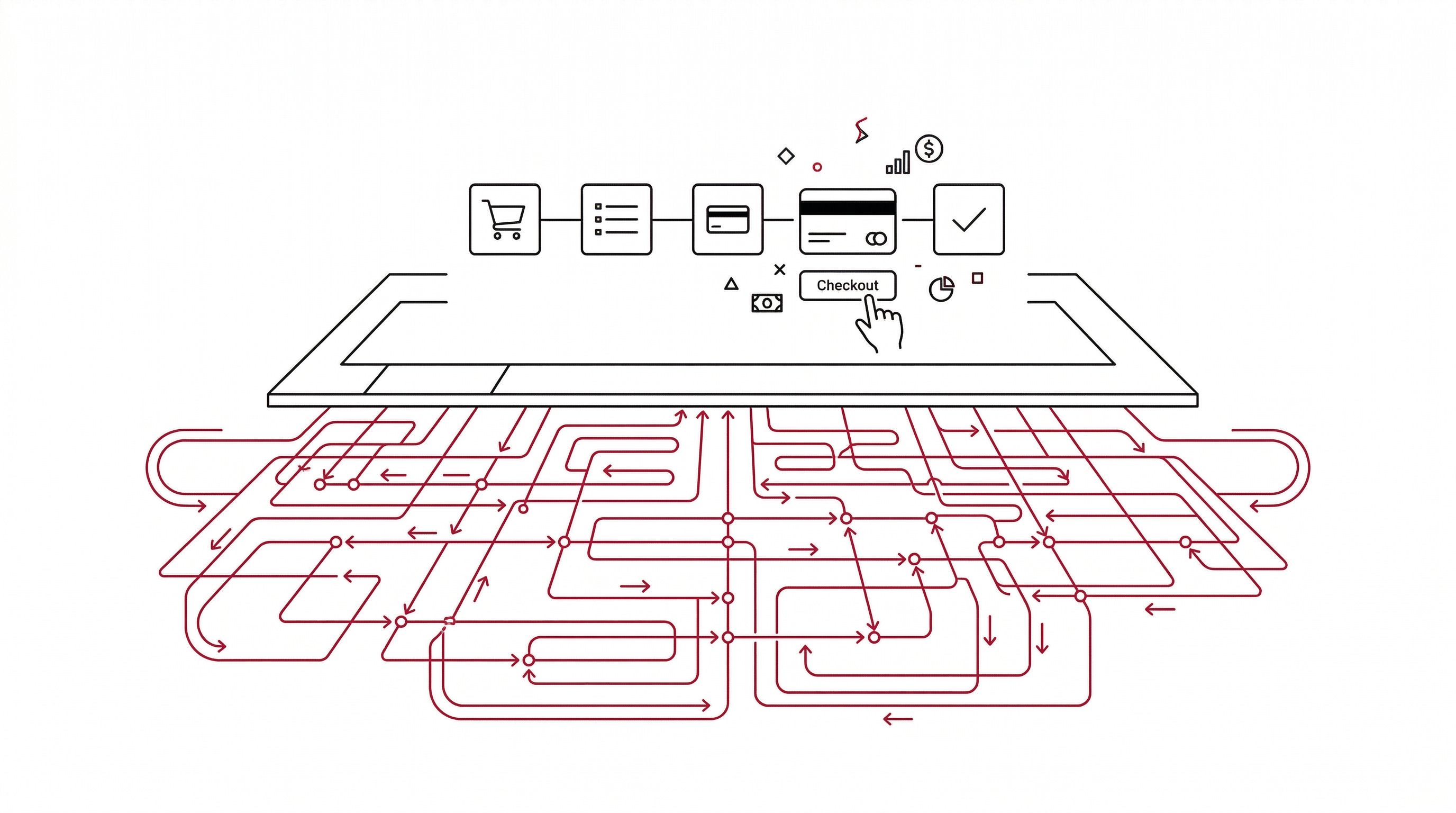
The e-commerce industry has a measurement problem. It is not that companies track the wrong numbers. It is that they track the right numbers for a game that has already changed.
For two decades, the conversation around digital commerce has centered on a familiar set of questions. Who has more selection? Who converts more efficiently? Who ships faster? Who acquires customers more cheaply?
These questions share a common bias: they all describe what happens before or at the moment of checkout.
The problem is that checkout is not the end of the transaction.
It is the midpoint.
The Half That Gets Ignored
The front half of e-commerce is easy to see, easy to measure, and easy to compare. A customer searches, scrolls, compares, adds to cart, and pays. That sequence produces the data that fills dashboards and investor presentations.
The back half is different.
Was the inventory actually available? Did the delivery promise hold? If the item was late, wrong, or unwanted, how hard was it to fix? How much of that effort stayed inside the system — and how much got pushed back onto the customer?
These questions are not glamorous. But they often determine whether a platform becomes part of everyday life or remains just another place to shop.
Routine Is the Real Test
A customer can forgive friction once. Curiosity, price, urgency, novelty — all of these can overcome a rough experience on a single order.
But everyday commerce is built on repetition. And repetition is where weak systems reveal themselves.
If every repeated purchase forces the customer to re-evaluate the delivery promise, decode the return policy, or guess who is responsible when something breaks, the system remains fragile. It may grow. It may perform well on the standard scoreboard. But it stays dependent on reacquiring attention rather than deepening routine.
The strongest commerce systems reduce the amount of interpretation the customer must do across the full transaction. They make the next purchase feel lighter — not because the interface is clean, but because the process has become dependable.
Why This Matters Now
Three shifts are making this urgent.
Surface advantages are getting easier to copy. A cleaner app can be replicated. Aggressive pricing can be met. Recommendation algorithms converge. What is much harder to copy is a system that closes, recovers, and repeats transactions at high density with low customer effort.
Cross-border competition is intensifying. New entrants only need to be compelling at the front of the transaction — price, novelty, social momentum. If the domestic platform has not integrated the execution layer, it remains exposed at the top of the funnel with no structural moat underneath.
Agent-driven commerce is approaching. AI agents will not tolerate fragmentation the way humans do. Their preferences will be shaped by fulfillment reliability, return friction, and total transaction confidence. The systems that have already closed the post-checkout gap will start from a stronger position.
The Question That Changes Everything
The industry keeps asking who can win the most clicks. The more useful question is who can reliably close the loop — who can carry the transaction from intent through fulfillment, delivery, recovery, and repeat purchase without forcing the customer to manage the gaps.
That question already has different answers depending on the market. In some places, the shift is just beginning. In others — particularly in South Korea — it happened earlier and more visibly than most outside observers realize.
How that played out, and what it reveals about where commerce is heading, is the longer story.
The full structural case — from Korea’s market conditions to the company that built the strongest execution system inside it — is in K-Commerce Endgame, available on Amazon Kindle.